
Aromas of Biryani — The Complete Guide to Biryani Fragrance
The aroma of biryani is one of the most complex, beautiful, and deeply satisfying scents in Indian cooking. Here is the complete guide to creating that legendary biryani fragrance with Lababdar Punjab basmati.
The Aromas of Biryani — What Makes It So Irresistible
The aroma of a properly made biryani is often described as one of the most complex, beautiful, and deeply satisfying scents in all of Indian cooking. It combines the floral fragrance of aged long grain basmati from Punjab, the warm spice notes of whole aromatics, the richness of caramelised onions, the freshness of mint, and the delicate touch of saffron. Lababdar Foods is here to help you understand and recreate this legendary aroma in your own kitchen.
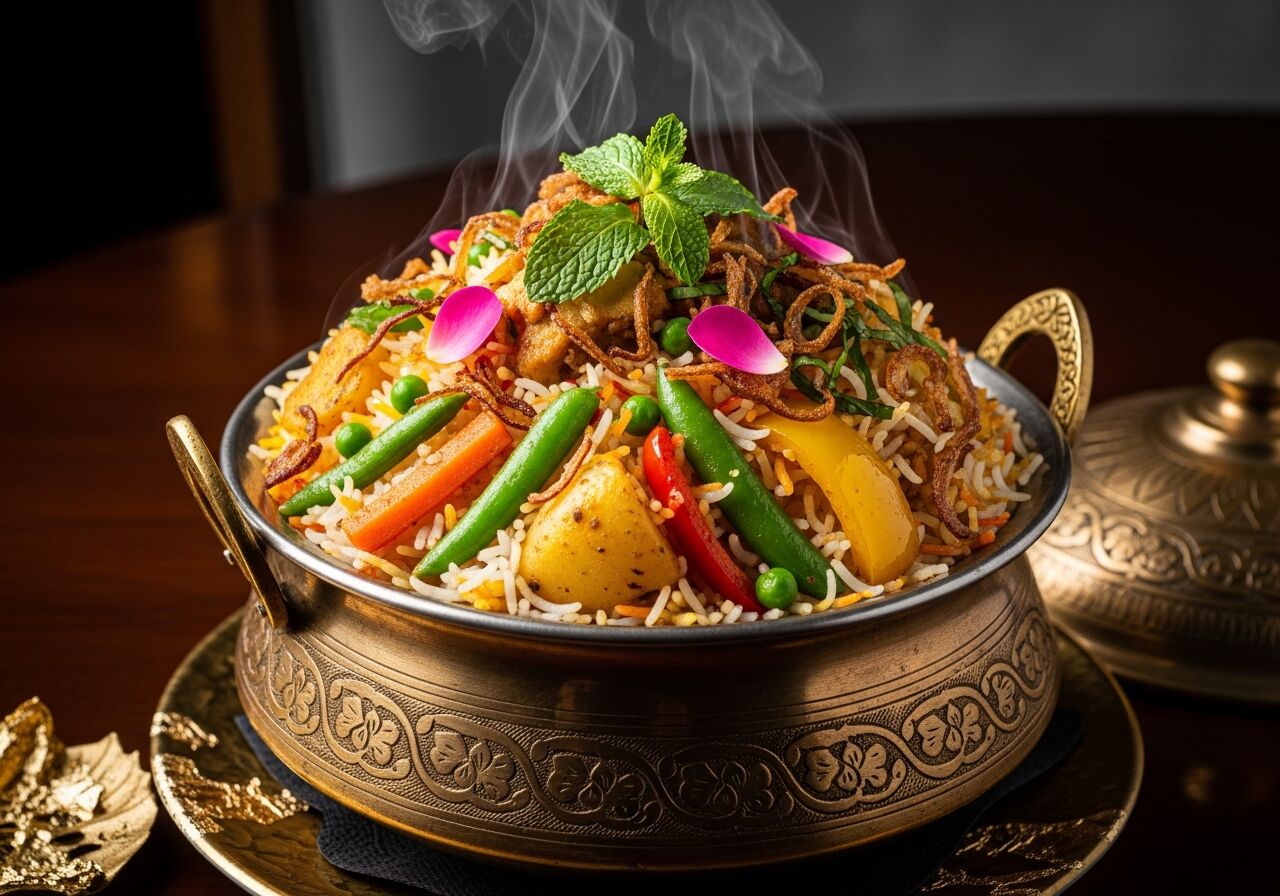
Aromas of Biryani — The Complete Fragrance Guide
Every layer of biryani aroma — from rice to spices to cooking technique — explained.
The Basmati Aroma — Foundation of Biryani
The most important aroma in biryani comes from the rice itself. Aged long grain basmati from Punjab is naturally rich in 2-acetyl-1-pyrroline (2-AP) — the compound responsible for basmati's unique floral, popcorn-like fragrance. Lababdar basmati is aged 12–24 months to maximise 2-AP concentration. When this rice meets hot dum steam, it releases a warm, complex floral scent that fills the entire kitchen — the unmistakable foundation of authentic biryani aroma.
Whole Spices — The Aromatic Heart of Biryani
The whole spices in biryani create its complex, warm, layered fragrance: Bay leaves (earthy, herbal base), Green cardamom (floral, sweet, cooling), Black cardamom (smoky, camphor-like depth), Cloves (intense, woody, antiseptic warm note), Cinnamon (sweet, warm spice), Star anise (anise-liquorice note), and Mace (softer nutmeg-like floral tone). Each spice layer contributes a distinct aromatic note that together create biryani's signature multi-dimensional fragrance.
Saffron — Biryani's Most Prized Aroma
Saffron (kesar) adds a distinctive honeyed, metallic-floral aroma and golden colour that signals premium biryani quality. The correct technique: bloom a generous pinch of saffron threads in 3–4 tbsp warm milk for 20 minutes, then drizzle over the layered rice just before sealing the dum. This releases saffron's volatile aromatic compounds at the right temperature. Use Kashmiri saffron for the most intense aroma and deepest colour in your biryani.
Kewra Water & Rose Water — The Finishing Aromas
Kewra water (pandanus extract) adds a sweet, floral-fruity aroma that is quintessential to Awadhi and Mughlai biryani. Rose water adds a delicate floral note that rounds out the overall fragrance. Both are added in small quantities (1 tbsp each) just before sealing the dum pot. These finishing aromas evaporate during the dum cooking, penetrating every grain of basmati with their delicate fragrance — the final layer that separates a great biryani from an extraordinary one.
Birista — Crispy Fried Onions
Birista (deeply caramelised, crispy fried onions) adds a rich, sweet-savoury aroma that is the backbone of every biryani masala. Properly made birista takes 25–30 minutes of slow frying in oil until golden-brown and crisp — the Maillard reaction creates hundreds of aromatic compounds. Used in the masala, layered on the rice before dum, and as garnish — birista's caramel-onion fragrance is as important as any spice in creating authentic biryani aroma.
Fresh Mint & Coriander — The Green Freshness
Fresh pudina (mint) and coriander leaves are layered between the rice and masala in biryani — providing a bright, cooling, green freshness that contrasts beautifully with the warm spice aromas. During dum cooking, mint releases menthol and menthone — volatile compounds with a cooling, fresh, herbaceous aroma. Never use dried mint in biryani — only fresh whole mint leaves give the authentic herbal freshness that balances biryani's rich warmth.
Dum Cooking — The Aroma Trap
Dum cooking is the technique that captures and concentrates biryani's multiple aromas. The pot is sealed with dough (or foil) so no steam escapes — creating a pressurised aromatic environment inside. For 25–35 minutes on slow heat (often with a hot tawa underneath), all the aromas — saffron, kewra, basmati, whole spices, mint, birista — meld together, penetrate every grain of rice, and build into the legendary complex fragrance that erupts when the dum pot is opened at the table.
Why Lababdar Basmati is Essential for Biryani Aroma
The basmati rice is the single biggest contributor to biryani aroma — it is present in every layer, every spoonful, every bite. Lababdar long grain basmati from Punjab, aged 12–24 months, has the highest 2-AP aroma concentration and the lowest starch content for perfectly separate, non-sticky grains. When our basmati meets dum steam and biryani spices, it creates the legendary fragrance that restaurant biryani lovers recognize immediately. This is not a coincidence — it is the science and tradition of Punjab basmati combined.
Biryani Spices — Aroma Profile Quick Reference
| Spice/Ingredient | Aroma Profile | Role in Biryani | Quantity (for 1kg rice) |
|---|---|---|---|
| Long Grain Basmati | Floral, popcorn-like (2-AP) | Foundation aroma | 1kg |
| Saffron (Kesar) | Honeyed, metallic-floral | Premium aroma & colour | 1/4 tsp (in warm milk) |
| Green Cardamom | Floral, sweet, cooling | Floral top note | 8–10 pods |
| Cinnamon | Warm, sweet spice | Warm base note | 2 inch piece |
| Cloves | Intense, woody, warm | Depth & antiseptic note | 6–8 cloves |
| Star Anise | Sweet anise, liquorice | Complex anise note | 2 whole |
| Kewra Water | Floral-fruity, sweet | Finishing floral top | 1 tbsp |
| Fresh Mint | Menthol, cool, green | Fresh cooling contrast | 1/2 cup packed |
| Birista (Fried Onion) | Sweet, caramel, savoury | Rich base sweetness | 1 large onion |
Frequently Asked Questions — Aromas of Biryani
What is the most important ingredient for biryani aroma?
The basmati rice is the most important aroma contributor in biryani — it is present in every layer. Aged long grain basmati from Punjab, rich in the 2-AP compound, provides the distinctive floral fragrance that is the foundation of authentic biryani aroma. Saffron and kewra water are the most distinctive finishing aromas.
Why does restaurant biryani smell so much better than home biryani?
Restaurant biryani uses better quality aged basmati rice (like Lababdar's 12–24 month aged variety), proper whole spices (not ground), authentic kewra water and saffron, generous birista, and — critically — the true dum cooking technique with a properly sealed pot. The sealed dum creates an aromatic pressure chamber that infuses every grain with the combined fragrance of all ingredients.
What makes Punjab basmati smell different in biryani?
Punjab basmati contains the highest concentration of 2-acetyl-1-pyrroline (2-AP) — the aromatic compound responsible for basmati's unique floral, popcorn-like fragrance. Aging in climate-controlled silos for 12–24 months intensifies this compound. No other rice variety produces this specific compound at this concentration — making Punjab basmati truly irreplaceable in biryani.
How do I make my biryani more aromatic at home?
Use aged long grain basmati (Lababdar), bloom saffron in warm milk before use, add kewra water just before sealing, use fresh whole spices (not ground), make proper birista, layer fresh mint generously, and use authentic dum technique with a sealed pot. Each step adds an aromatic layer that together creates restaurant-level biryani fragrance.
Where can I buy biryani special basmati rice in Punjab?
Lababdar Foods offers biryani special basmati rice — aged long grain, export grade, lowest starch content for maximum grain separation — directly from our Punjab mill in 1kg, 5kg, 10kg, and 25kg packs.
Get the Best Basmati Rice for Perfect Biryani Aroma
Lababdar aged long grain basmati from Punjab — the foundation of extraordinary biryani fragrance.
More Biryani & Rice Guides from Lababdar
Explore our complete rice and recipe resource library.