
Basmati Rice Cost in Punjab — Complete Price Guide
Understand basmati rice cost factors, variety pricing, pack size savings, and get the best direct-from-mill basmati rice price from Lababdar Foods, Punjab.
Basmati Rice Cost in Punjab — What Determines the Price?
Basmati rice cost in Punjab varies based on variety, grain quality, aging period, pack size, and where you buy from. Understanding these factors helps you make smarter buying decisions — and ensures you get the best value for your money. Lababdar Foods offers transparent, mill-direct pricing on all basmati rice varieties in Punjab — no middlemen, no hidden markups, just honest pricing for premium quality.
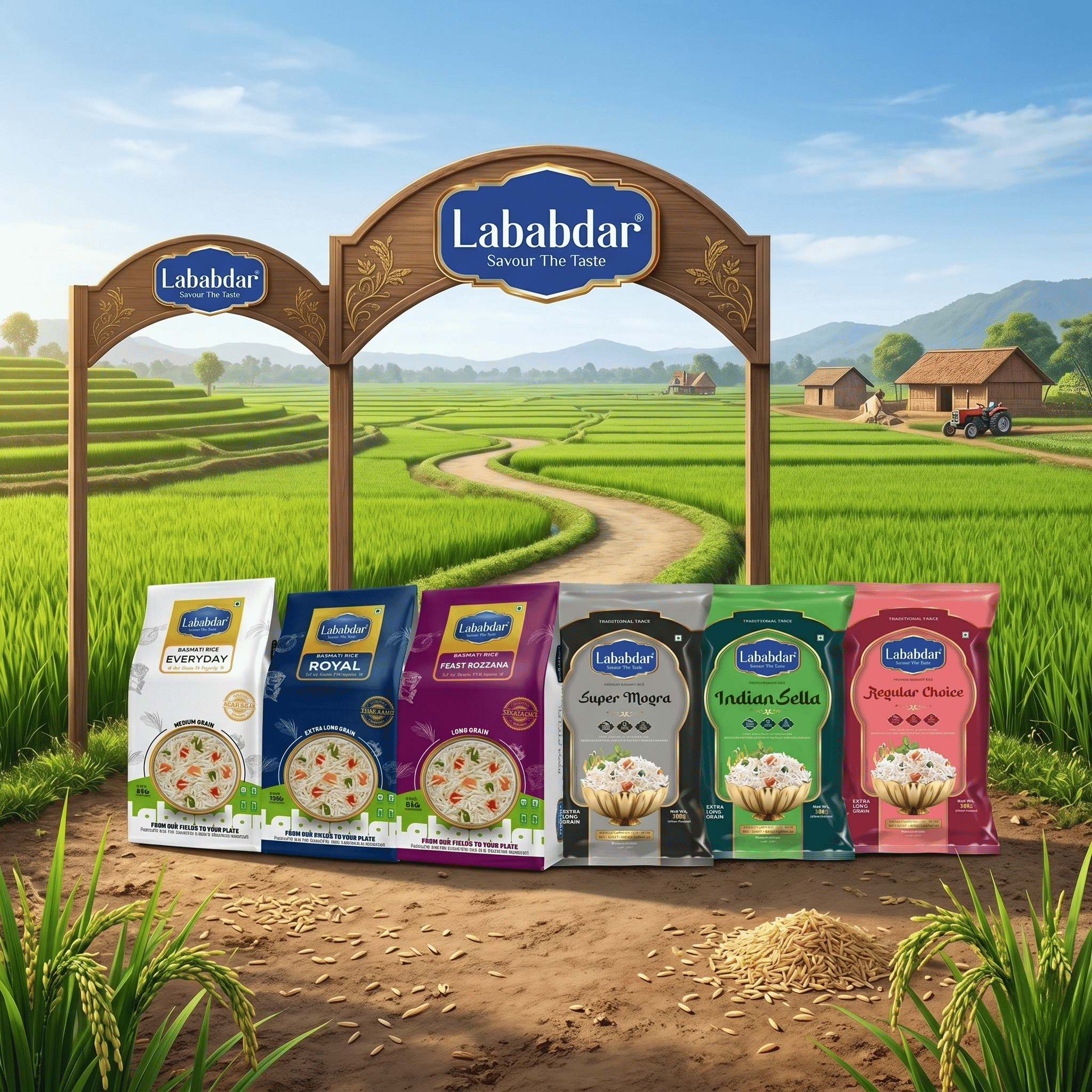
Basmati Rice Cost in Punjab — Complete Buyer's Guide
Eight key factors that determine basmati rice cost in Punjab and how to get the best value.
Grain Length — The Primary Cost Driver
The longer the grain, the higher the basmati rice cost. Extra-long grain basmati (8mm+) commands a significant premium over medium-long grain (7mm) or shorter grain varieties. This is because longer grains are harder to produce consistently, have lower yield per hectare, and require more careful processing. When comparing basmati prices, always check the grain length specification — it is the most reliable indicator of genuine quality and fair pricing.
Aging Period — Why It Affects Cost
Properly aged basmati rice costs more because aging ties up capital in inventory for 12–24 months. Freshly milled rice is cheaper but lacks the intense 2-AP aroma and grain firmness of properly aged basmati. When you pay more for aged Lababdar basmati, you are paying for the time invested in creating the superior aroma and cooking quality that sets it apart from freshly milled cheaper alternatives.
Organic vs Conventional — Cost Difference
Organic basmati rice in Punjab costs 20–35% more than conventionally grown basmati. This premium reflects: organic certification cost, lower farm yields (no synthetic boosters), more labour-intensive farming, separate processing lines to prevent cross-contamination, and lab testing for residue-free certification. For families with children, elderly members, or health conditions, the organic premium is well worth the investment.
Golden Sella vs White Basmati — Price Comparison
Golden Sella basmati rice typically costs slightly more than white basmati of the same grain length due to the additional parboiling processing step. However, Golden Sella has a longer shelf life (18–24 months vs 12–15 months), lower water consumption in cooking, and higher nutrient content — making it better value over time for caterers, restaurants, and bulk buyers who need consistent shelf life and performance.
Pack Size vs Price — How to Save More
Larger pack sizes always give a lower per-kg cost of basmati rice in Punjab. Compared to the 1kg pack price per kg: 5kg saves ~15–20%, 10kg saves ~25–30%, 25kg saves ~35%, and 30kg saves ~40%+. For families that use 5kg+ of basmati rice monthly, upgrading from multiple 1kg packs to a single 5kg pack is the most immediate way to reduce your basmati rice cost without compromising quality.
Mill-Direct vs Retail — The Biggest Savings
Buying basmati rice directly from a mill in Punjab (like Lababdar Foods) versus buying from a retail store typically saves 15–25% on the same quality. Retail adds: distributor margin (8–12%), regional wholesaler margin (5–8%), and retailer margin (15–20%). When you buy Lababdar basmati directly, you eliminate all these layers and get the same export-grade rice at honest mill pricing that reflects actual production cost.
Quality Certification and Its Impact on Cost
FSSAI certification, lab testing for pesticide residues, grain length grading, and laser colour sorting all add to production cost — and therefore price. However, uncertified, untested, ungraded cheap basmati is a false economy: poor aroma, inconsistent grain length, possible pesticide presence, and high broken grain percentage mean you pay less per kg but get significantly less value per meal. Lababdar's certified quality is verifiable in every bag.
Seasonal Factors Affecting Basmati Rice Cost
Basmati rice paddy is harvested once a year in Punjab (October–November kharif season). Prices fluctuate based on: monsoon quality (good rains = good yield = lower prices), domestic demand, international export demand (especially from Saudi Arabia and UAE), and government export policies. Buying larger quantities (25kg, 30kg) when seasonal prices are lower is a smart strategy for caterers and bulk buyers to reduce their annual basmati rice cost.
Basmati Rice Cost Comparison — By Pack Size & Variety
| Pack Size | White Basmati | Golden Sella | Organic Basmati | Best For |
|---|---|---|---|---|
| 1 kg | Standard | Slightly Higher | 20–35% Premium | Trial, small use |
| 5 kg | 15–20% Less/kg | 15–18% Less/kg | 15–20% Less/kg | Family monthly pack |
| 10 kg | 25–30% Less/kg | 22–28% Less/kg | 25–30% Less/kg | Frequent use, restaurants |
| 25 kg | 35% Less/kg | 30–35% Less/kg | Available on request | Caterers, bulk buyers |
| 30 kg | Best Rate/kg | Best Rate/kg | Available on request | Wholesale, export |
Note: Exact prices vary with season and market conditions. Contact Lababdar Foods for current pricing.
Frequently Asked Questions — Basmati Rice Cost in Punjab
What is the average basmati rice cost per kg in Punjab?
Basmati rice cost per kg in Punjab varies by variety, grade, and pack size. Contact Lababdar Foods for current pricing — we offer mill-direct rates that are typically 15–25% lower than retail market prices for the same quality.
Why does basmati rice cost more than regular rice?
Basmati rice costs more because of: GI-tagged cultivation in specific regions only, lower per-hectare yield, longer grain that requires more precise farming, 12–24 months aging process, additional grading and sorting, and FSSAI certification. The premium reflects genuine quality that cannot be replicated by non-basmati varieties.
How can I reduce my basmati rice cost in Punjab?
Buy larger pack sizes (5kg, 10kg, 25kg) for better per-kg rates. Buy directly from a mill like Lababdar Foods to eliminate distributor margins. Buy in bulk during post-harvest season (November–January) when prices are typically lower. Join our wholesale programme for regular bulk buyers for the best annual pricing.
Is expensive basmati rice worth the cost?
Yes — within the premium basmati segment. Longer grains, proper aging, FSSAI certification, and lab-tested quality translate into better aroma, better cooking results, fewer broken grains, and genuine health safety. The cost difference between premium and average basmati is usually just 15–25% per kg but the quality difference is significant.
How do I get wholesale basmati rice cost from Lababdar Foods?
Contact Lababdar Foods directly via phone or WhatsApp with your quantity requirement, preferred variety, and pack size. We offer competitive wholesale pricing on 25kg and 30kg bags with dedicated account management for regular buyers across Punjab and India.
Get the Best Basmati Rice Cost in Punjab
Mill-direct pricing from Lababdar Foods — no middlemen, no markups. Premium quality at the most competitive basmati rice cost in Punjab.
More Price Guides & Products
Compare packs, varieties, and pricing from Lababdar Foods Punjab.